1- Weather Data and Growth Cycle
The autumn and winter of 2024–2025 were particularly rainy, which allowed the water tables to rise. The winter was marked by extreme temperature variations in January, with 10 consecutive days of sub-zero temperatures alternating with warm and rainy weather at the beginning and end of the month. These cold spells encouraged pruning progress.
The vegetative cycle began under grey skies, and it was not until around 25 March, when the sun came out, that the vegetation began to wake up. Bud break is widespread on Côte de Beaune by 5 April. This is the ideal time to start working the soil. The buds emerge from their cotton wool and, under summer temperatures, the 1-2 leaf stage is reached in mid-April. The vegetation grows rapidly, taking only a week to progress from the green tip stage to the 3-leaf stage.
Our winegrowers are instructed to carry out moderate debudding. Indeed, fruit set is not excessive and we are frequently seeing signs of fruit drop due to a sharp drop in temperature at the end of April.
Our first organic treatment is scheduled for 28 April at the 5-leaf stage. The inflorescences and new shoots must be protected. At the beginning of May, with temperatures below 30°C, growth is intense and steady. Our teams are busy debudding and then lifting the vines in our Meursault Perrières and Volnay Clos des Chênes vineyards to protect them from the numerous storms in mid-May.
Flowering begins between 25-28 May for white grapes and around 3 June for red grapes in Côte de Beaune. It takes place in two stages: beginning in summer temperatures, it ends in cool and unsettled weather, leading to coulure and millerandage and a sharp decline in harvest potential.
The first heatwave, which lasted from 9 June to 5 July, did not hinder berry growth, and cluster closure was observed from 25 June onwards in most of our plots. However, the much-feared coulure was clearly visible, and millerandage was common. We expect a poor harvest, with Chardonnay likely to be the most affected due to small bunches and berries. These phenomena are less pronounced for Pinot Noir thanks to better weather conditions during flowering. The grapes are in good health, acclimatising to the heat and showing no signs of wilting, but we are exercising caution and pruning moderately.
We had to wait until 6 July for conditions to return to normal for the season. By mid-July, the first green berries were visible in our Corton Maréchaudes and Beaune Grèves vineyards. By the end of July, we were close to 20% veraison, depending on the sector, with veraison ending between 5 and 8 August. The grapes were in perfect health, small in size, with a loose, airy structure, and we prepared to harvest at the end of August.
2- Harvest, Vinification, and Aging
In order to fully understand the 2025 vintage, we began taking maturity samples from our 80 plots on 8 August, at a rate of two analyses per week per plot, in order to determine the optimal harvest date for each one. 2025 will be a heterogeneous vintage and each sector will require a detailed analysis of its maturity. During the first three weeks of August, the weather was hot and sunny, providing ideal conditions for phenolic ripeness. The grapes are withstanding sunburn well; a few berries have shriveled, but the bunches remain magnificent.
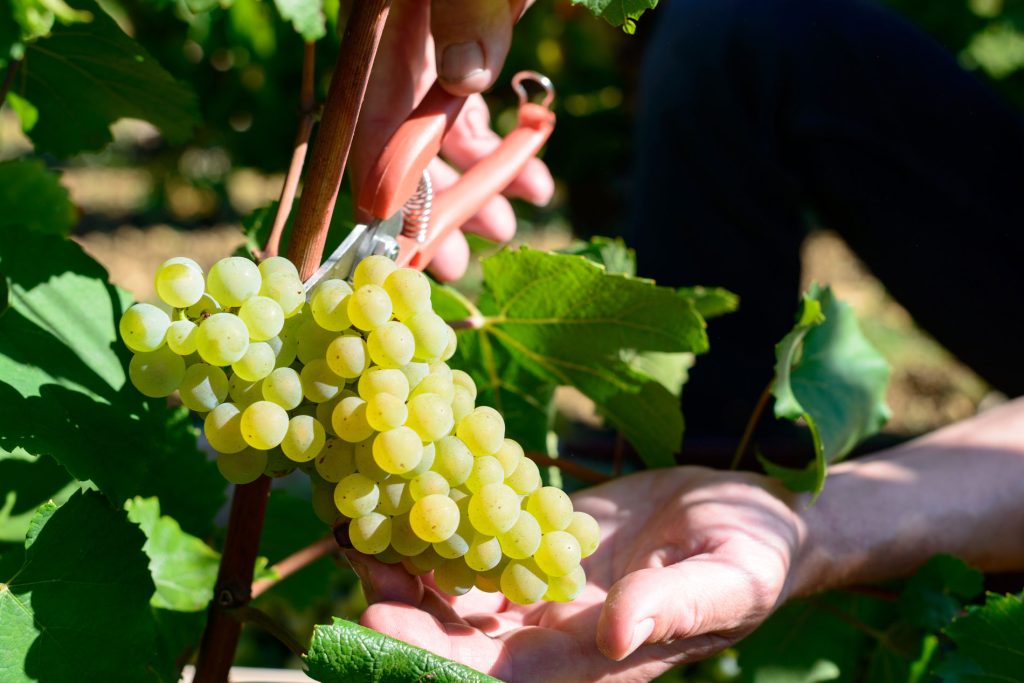
On the estate’s 65 hectares, harvesting began on 22 August on our Beaune Toussaints, Volnay Clos des Chênes and Meursault Perrières plots, and ended on 4 September with our Savigny reds.
For our red wines, we carried out a rigorous manual and optical sorting of the harvest in order to select and put only the healthiest grapes into the vats.
After a 5-day cold pre-fermentation maceration, alcoholic fermentation was smooth and steady without too much punching down, mainly pumping over to gently extract deep colour and the highest quality tannins. After vatting for around 16 to 20 days, the wines were then transferred to oak barrels to complete their ageing on lees.
For Chardonnay grapes, after manual sorting, pressing and settling, alcoholic fermentation took place in barrels for 10 to 15 days depending on the terroir. Aged on lees, stirring of the lees is carried out on a case-by-case basis, as each cuvée is unique.
3- Tasting
At the beginning of February, our wines completed their malolactic fermentation. On tasting, we fiund aromas of great purity and good balance, with delicious flavours and fruitiness in both colours. The tannins in the reds are concentrated and display a beautiful expression of Pinot Noir. The whites are expressive, finely crafted and aromatic, characteristic of the great wines of Burgundy.
This very promising 2025 vintage will reach its peak in 3 to 5 years.